
Frequently Asked Insurance Questions
Direct, factual answers to essential coverage questions across automobile, homeowners, marine, and commercial policies.
Yes, in most circumstances within the U.S. and Canada. Your personal automobile liability and physical damage coverages (collision and comprehensive) typically transfer to temporary rental vehicles, subject to the deductibles on your primary vehicle.
The Critical "Loss of Use" Trap: When a rental car is damaged, rental car companies routinely charge for "loss of use" (the daily rental revenue lost while the car undergoes repairs). Standard personal auto insurance policies do not always cover loss of use charges. However, rental car Collision Damage Waivers (CDWs) cost $8 to $12 per day—annualized to over $4,000 per year—and are an expensive waiver rather than true insurance. Many major credit cards offer secondary or primary rental protection that covers loss of use if you charge the full rental on the card.
Yes. Your personal auto policy provides territorial protection throughout the United States, its territories and possessions, and all Canadian provinces. Furthermore, your policy includes an automatic upward adjustment clause: if another state or province mandates higher minimum liability limits than Delaware, your policy automatically broadens to satisfy that jurisdiction's legal threshold.
Important Exclusion: Coverage does not apply in Mexico or overseas territories. Dedicated cross-border Mexican policies must be secured before driving south of the U.S. border.
In the insurance industry, coverage strictly follows the vehicle. When you loan your car to someone driving with your express or reasonably implied permission, your auto policy acts as the primary source of insurance coverage. If damages exceed your policy limits, the driver's own personal insurance may serve as secondary coverage.
If you are at fault: Your insurance company pays for vehicle repairs minus your collision deductible, makes payments to lienholders/lessors, and manages third-party property damage and bodily injury claims up to your policy limits.
If you are not at fault: The at-fault driver's insurance is responsible for vehicle repairs and bodily injury medical bills. If the at-fault driver lacks insurance or carries inadequate limits, your own Uninsured/Underinsured Motorist (UM/UIM) coverage responds directly to cover the deficiency.
A core commercial risk management package comprises:
- Commercial General Liability (CGL): Protects against bodily injury and third-party property damage claims arising from business operations.
- Professional Liability (Errors & Omissions / E&O): Mandatory for advisory, medical, engineering, architectural, and legal consultants.
- Commercial Property & Business Interruption: Reimburses structure/inventory losses and pays payroll and operating expenses while rebuilding.
- Commercial Auto: Required for all company-titled vehicles and transport operations.
- Workers’ Compensation: Statutory requirement in DE, MD, PA, and VA covering workplace injuries and medical care.
At Pratt Insurance, our in-house claims advocacy desk guides you through five clear stages:
- Adjuster Contact: Within 24-48 hours of reporting, an assigned claims adjuster contacts the policyholder to review loss details.
- Loss Inspection: The adjuster performs an on-site physical inspection or verifies asset valuation receipts.
- Repair/Replacement Estimate: A formal itemized scope of loss and estimate is prepared.
- Claim Payment Check: The insurer disburses payment (less deductible) to begin immediate repairs.
- Supplemental Payouts: If hidden damage is uncovered during reconstruction, our Pratt team coordinates supplemental approvals from the carrier.
Partially. Standard homeowners insurance (HO-3 and HO-5 forms) covers severe wind, hail, tornado damage, and fallen trees. However, standard policies strictly exclude damage caused by earthquakes, earth movement, and flood waters. Flood protection requires a dedicated NFIP policy, and earthquake endorsements must be scheduled separately.
Condo association master policies only protect the building's exterior shell, roofs, and shared common elements (hallways, elevators). Unit interiors, flooring, cabinetry, appliances, personal belongings, and liability remain entirely unprotected. A personal HO-6 condominium policy covers your interior improvements, contents, and loss assessment liability.
Everything You Need to Know About Flood Insurance
Did you know that even if you are not located near an ocean, lake, or river, you still face flood risks? Make sure your physical structure and contents are covered.
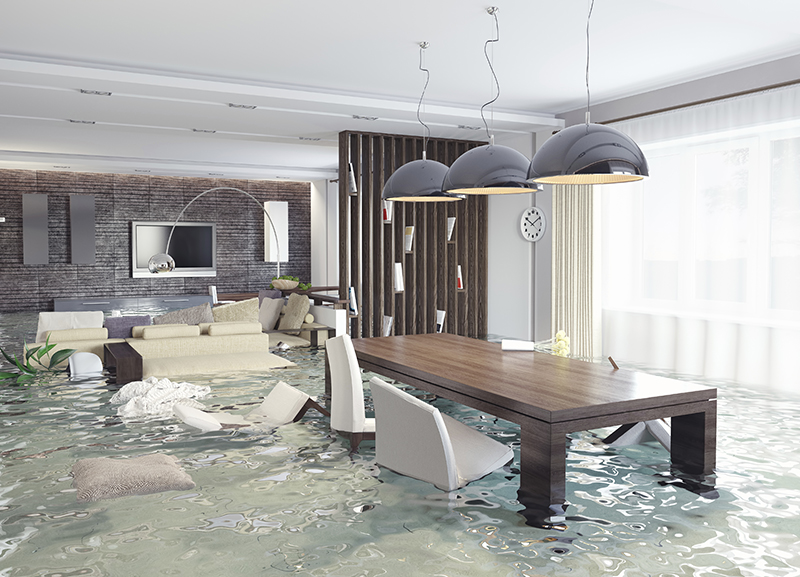
Every Property is in a Flood Zone
Flooding is not limited to coastal storm surges or river overflows. Torrential downpours, overwhelmed municipal storm sewers, collapsed water mains, and rapid snowmelt cause catastrophic flooding far inland. In fact, over 25% of all National Flood Insurance Program (NFIP) claims occur outside designated high-risk Special Flood Hazard Areas (SFHAs).
Federal Disaster Assistance vs. NFIP Flood Insurance
Federal Disaster Assistance Pitfalls:
- Requires an official Presidential Disaster Declaration (issued in less than 50% of flooding events).
- Typically issued as an SBA loan that must be repaid in full with interest, usually on a 20 to 30-year amortization schedule.
- Frequently mandates purchasing flood insurance anyway to qualify for any future disaster relief.
National Flood Insurance Program (NFIP) Advantages:
- Claims are paid on covered property regardless of whether a federal disaster is declared.
- Zero repayment required; funds are disbursed directly from insurance premium reserves.
- Backed by the Federal Insurance Administration / FEMA.
Standard NFIP Policy Limits:
Residential Building Structure: Up to $250,000
Residential Personal Contents: Up to $100,000
Commercial Building Structure: Up to $500,000
Commercial Contents: Up to $500,000
Increased Cost of Compliance (ICC): Up to $30,000 to elevate or rebuild
Pratt Insurance writes federal flood policies in partnership with Harleysville Insurance under agreement with FEMA.
How to Avoid Identity Theft
Did you know identity theft restoration may be covered by your insurance? Educational guide provided via the Insurance Information Institute (III).

The Reality of Identity Fraud
Federal Trade Commission (FTC) research indicates that approximately 8.3 million Americans fall victim to identity theft annually. In 50% of incidents, victims suffered out-of-pocket costs of $500 or less, but in 10% of cases, financial damages exceeded $6,000. Alarmingly, 56% of victims were unable to determine how their personal credentials were breached.
Identity Theft Insurance Endorsements
Identity recovery coverage can be added to your Homeowners, Renters, or standalone policy for a modest annual fee. It reimburses certified mailing costs, notary fees, lost wages from taking time off work, fraud specialist consultation fees, and pre-approved attorney defense expenses.
10 Practical Identity Theft Prevention Best Practices
Employment Practices Liability Insurance (EPLI)
EPLI covers businesses against lawsuits alleging employee legal rights violations. Is your company properly shielded? Educational guidance via the Insurance Information Institute (III).

Small Business Vulnerability
While major employment class actions dominate national headlines, small and mid-sized enterprises face equal or higher legal vulnerability. Without dedicated corporate legal departments, smaller firms often lack structured HR documentation.
EPLI is available as a standalone commercial policy or as an endorsement to a Businessowners Policy (BOP). It covers legal defense fees, administrative settlements, and court judgments regardless of whether the business wins or loses the case.
Scope of Covered Employment Claims
Employer Risk Mitigation Protocols:
- Implement nondiscriminatory hiring screening and structured interview questions.
- Distribute updated employee handbooks containing explicit anti-harassment policies.
- Establish multiple confidential reporting channels for grievances.
- Meticulously document employee reviews, disciplinary warnings, and performance resolutions.